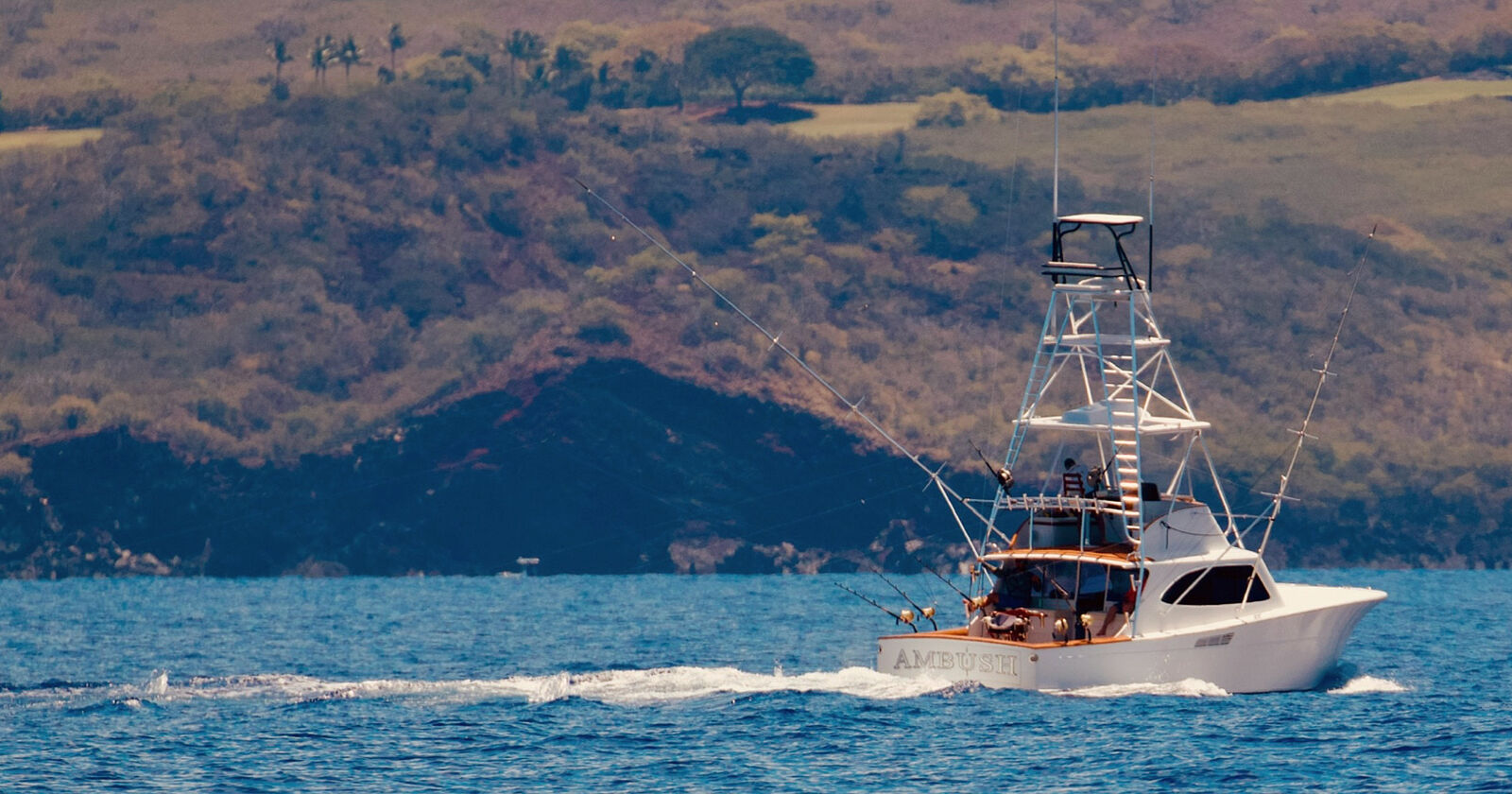
Ambush Sportfishing emblem
Fishing in Kona

What fish you can catch
in Kona.

See which fish live here, when each one is biting, and what makes Kona one of the best fishing spots in the world.

Call Captain Mark · (808) 366-4808
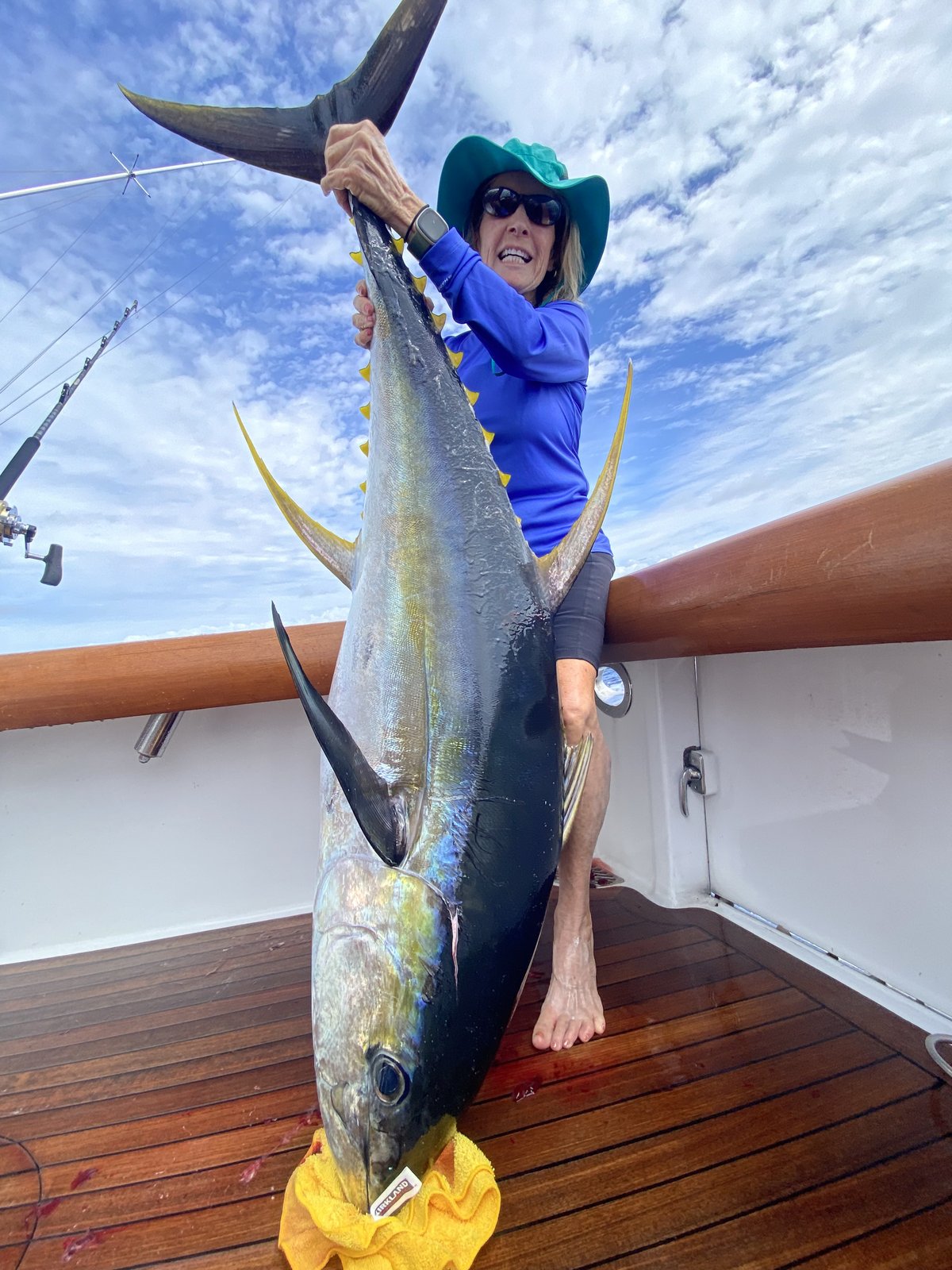
325lb Hawaiʻi record yellowfin tuna (ahi)
Most World fishing records on Earth
10min From the harbor to deep water
8 Big-game fish you can catch here
The Kona Drop-Off

Deep water, ten minutes from shore.

Most fishing spots make you ride an hour out to sea before you can fish for big game. Kona is different. The ocean floor drops to 600 feet deep just 10 minutes from the harbor. Different fish live at different depths — so the deeper we go, the bigger they get.

The Big Island blocks the wind, so the seas stay calm. Currents push bait fish toward the steep drop-off, and the big fish come there to feed. That is why Kona has more world fishing records than any other place on Earth.

  • 5 min 100 ft Reef No big-game fish live this shallow.
  • 10 min 500 ft Ono (wahoo) A fast fish that swims along here.
  • 15 min 1,000 ft Yellowfin tuna · Mahi mahi This is where big-game fishing starts.
  • 30 min 3,000 ft Blue marlin Kona's most famous fish lives here.
  • 45 min 6,000 ft Giant blue marlin · Bigeye tuna Marlin over 1,000 pounds swim down here.
The Kona Coast

The best fishing water in Hawaiʻi.

Right off the Kona coast, the ocean drops to 6,000 feet deep within a few miles of shore. Deep water close in, calm seas, and lots of bait fish — that mix is what makes Kona one of the best places in the world to catch big fish.
The Kona World Record
1,376 lb

The world record blue marlin was caught in Kona in 1982.

A marlin over 1,000 pounds is called a "grander." Two or three granders are caught in Kona every year — more than any other place on Earth.

The Kona Fishing Calendar

What's biting in Kona, month by month.

You can fish in Kona all year. Some fish are best in summer, some in winter, and some bite all year long. Tap any fish below to learn what it looks like, when it bites, how big it gets, and how to catch it.

Best — biting a lot Good — biting Slower — fewer fish
Species
Jan
Feb
Mar
Apr
May
Jun
Jul
Aug
Sep
Oct
Nov
Dec
Best months: June–September · 200–400 lbs (some over 1,000) Career best aboard Ambush800 lb

The most famous fish in Kona. Kona has caught more world-record blue marlin than any other place on Earth. The biggest one ever (1,376 lbs) was caught here in 1982.

Every year, two or three "granders" (marlin over 1,000 lbs) get caught in Kona. Most blue marlin weigh 200 to 400 pounds. Female marlin grow much bigger than males. The biggest ones can be over 2,000 lbs.

Best months: June–September · about 130 lbs (biggest in Nov–Dec) Career best aboard Ambush275 lb

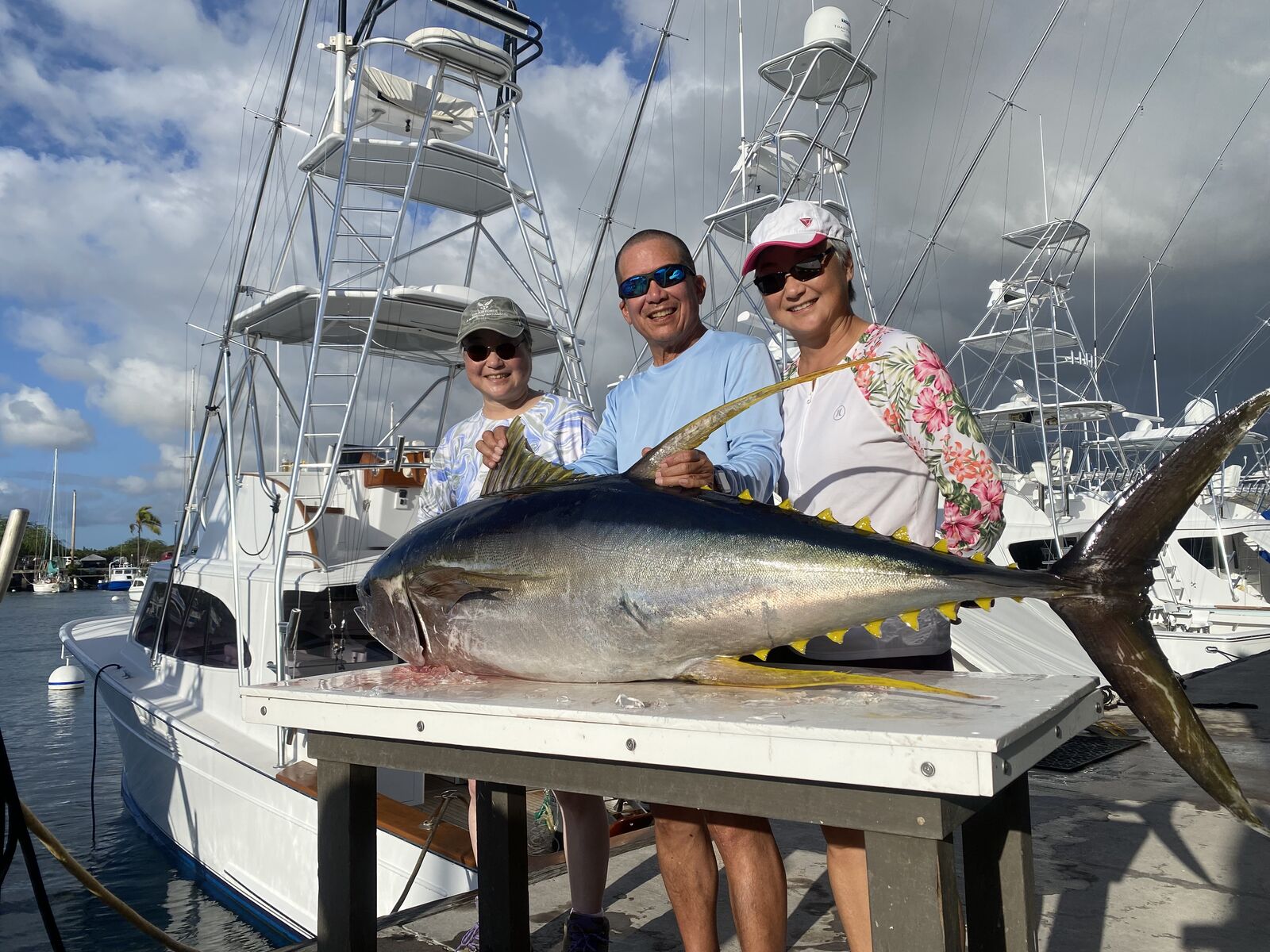
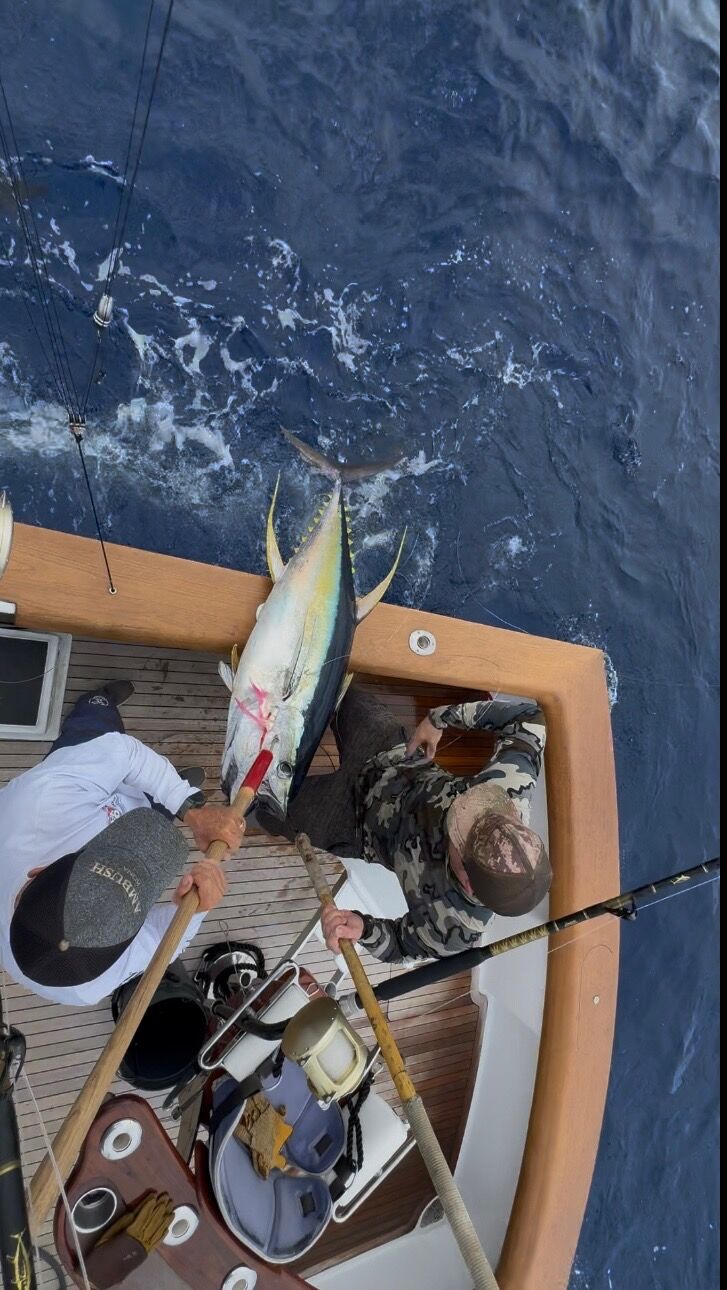
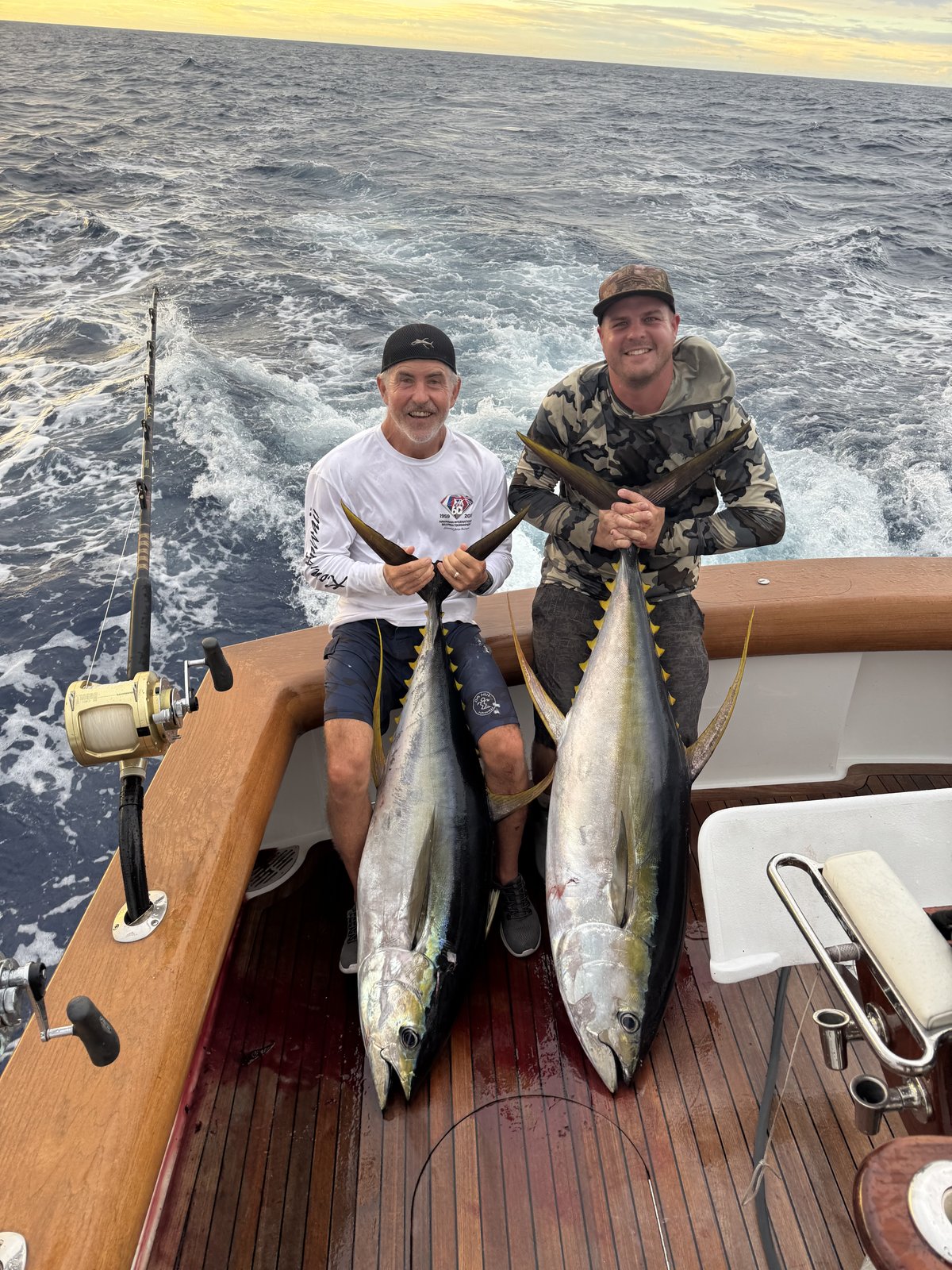
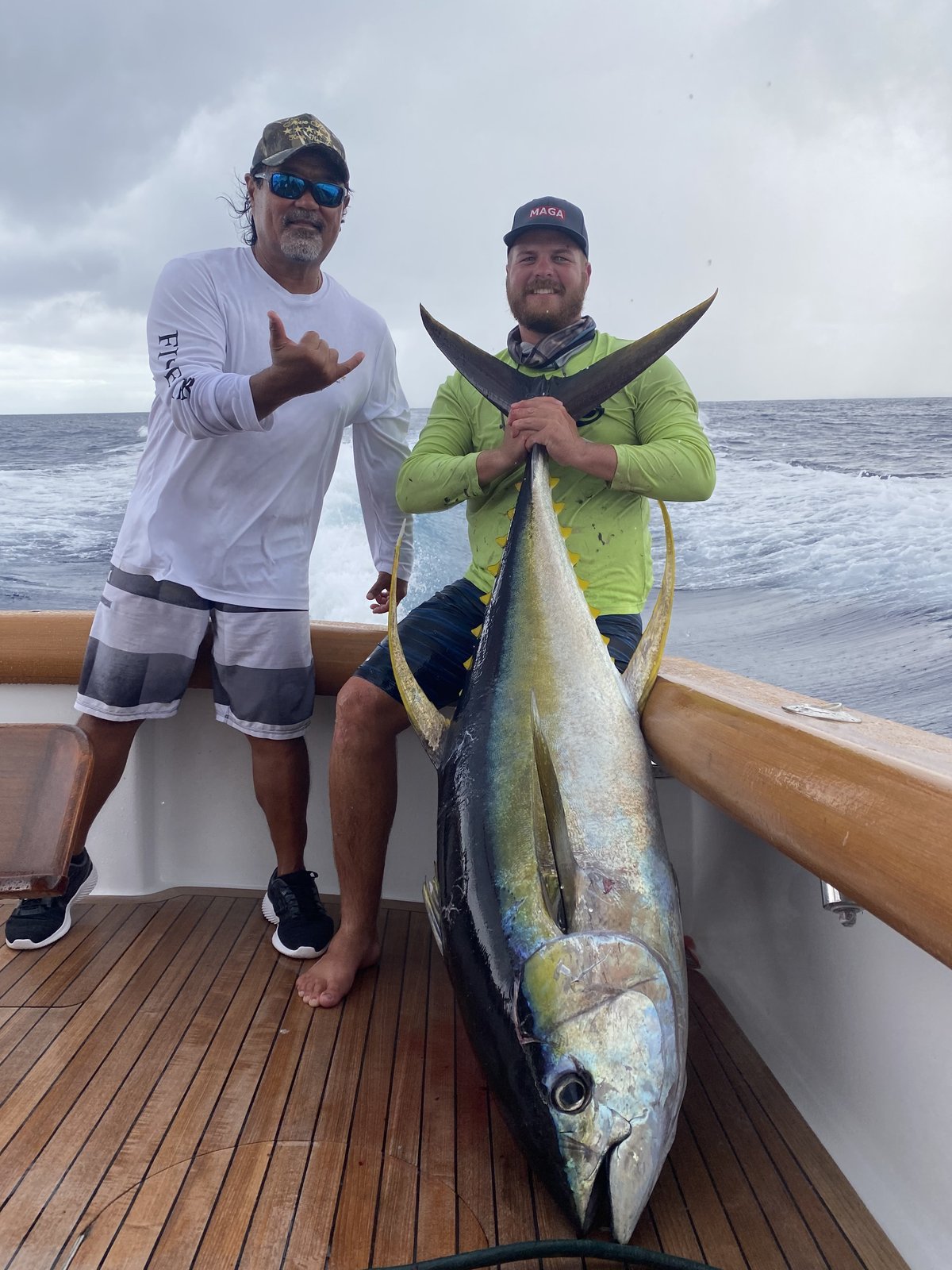
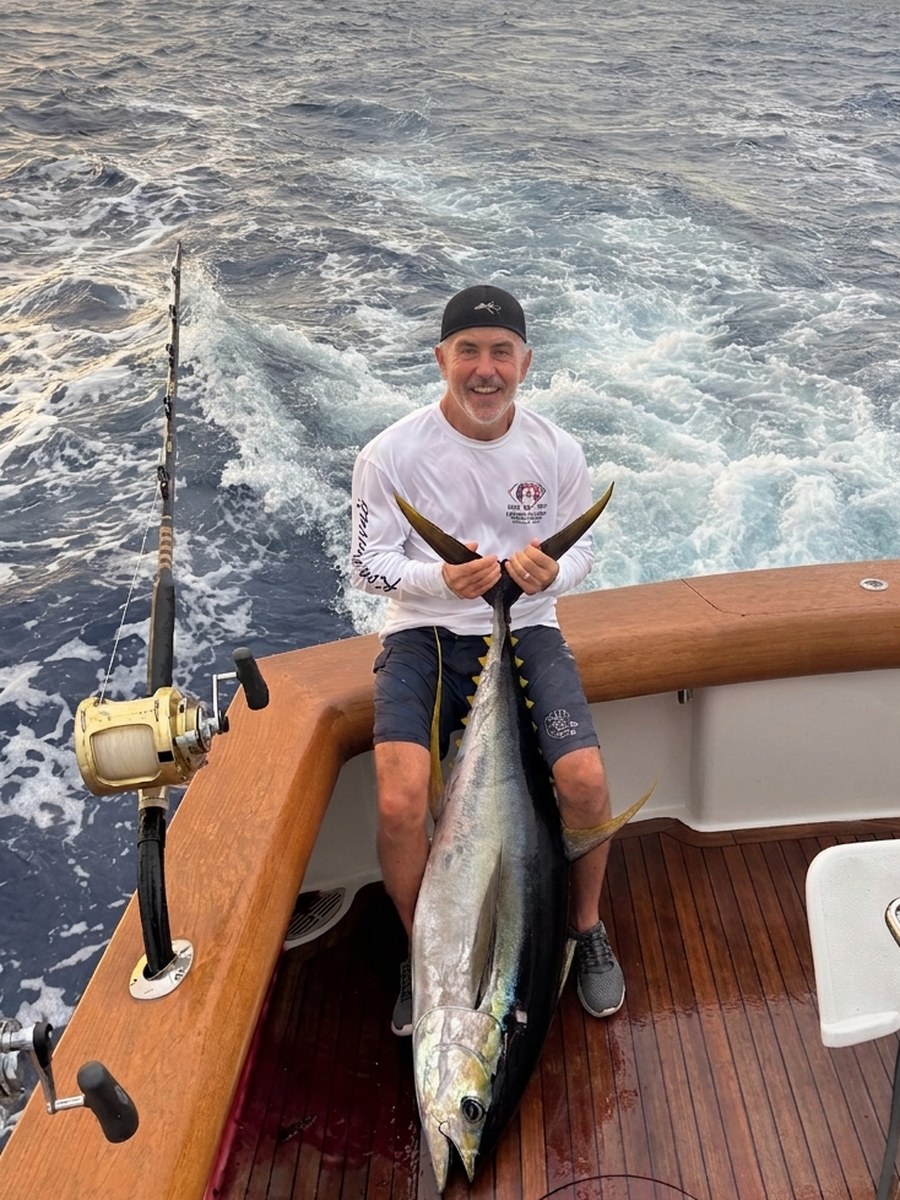
One of Kona's biggest fish. The Hawaiʻi record is 325 pounds. Yellowfin tuna can swim up to 50 mph. Big groups of them show up around Father's Day and stay all summer. The biggest ones often come in November and December.

Boats catch them by trolling big lures behind the boat. The biggest yellowfin like to swim under groups of spinner dolphins, so smart anglers drop live bait near the dolphins.

Best months: November–March · 15–40 lbs (some over 60)

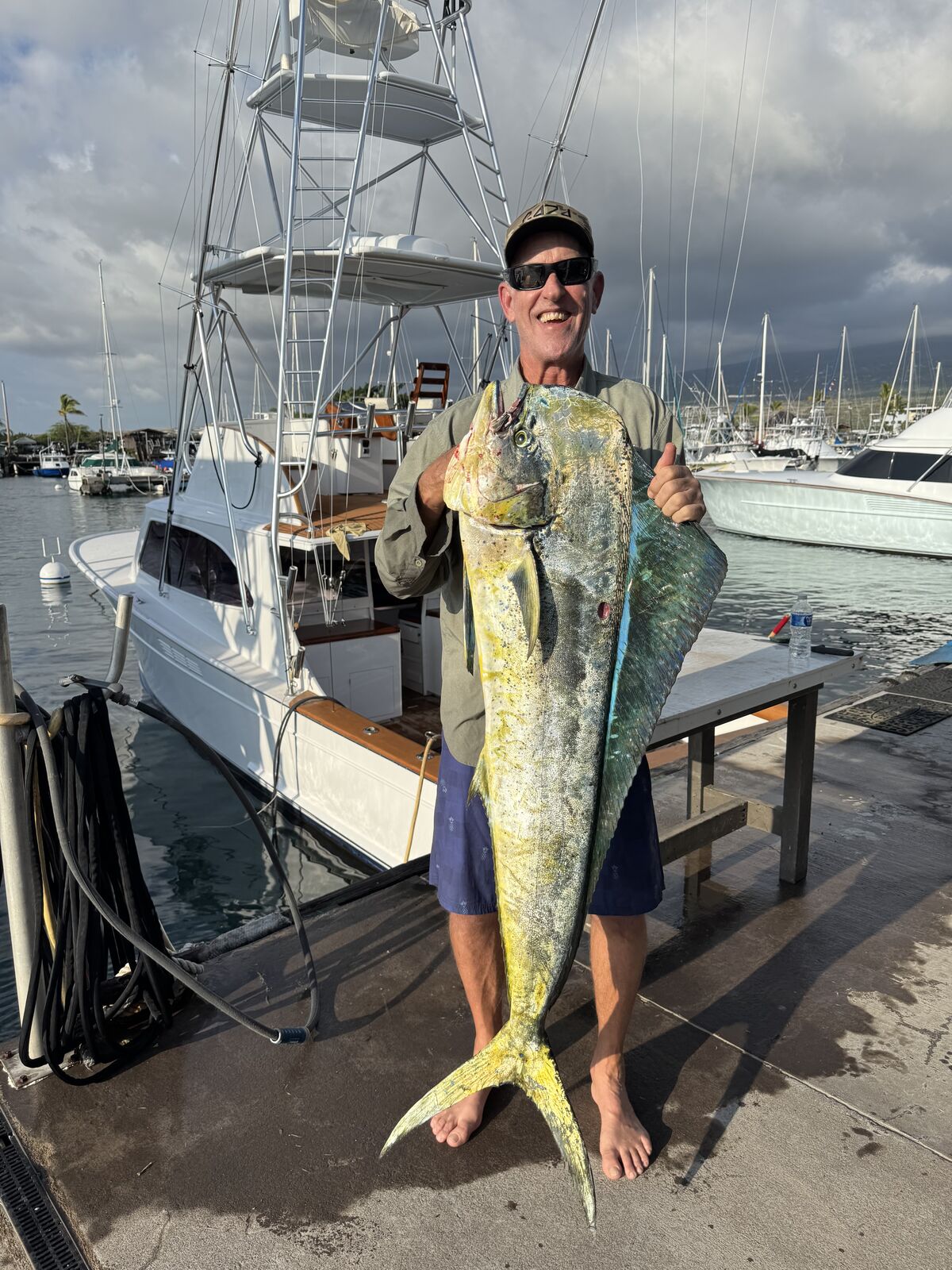
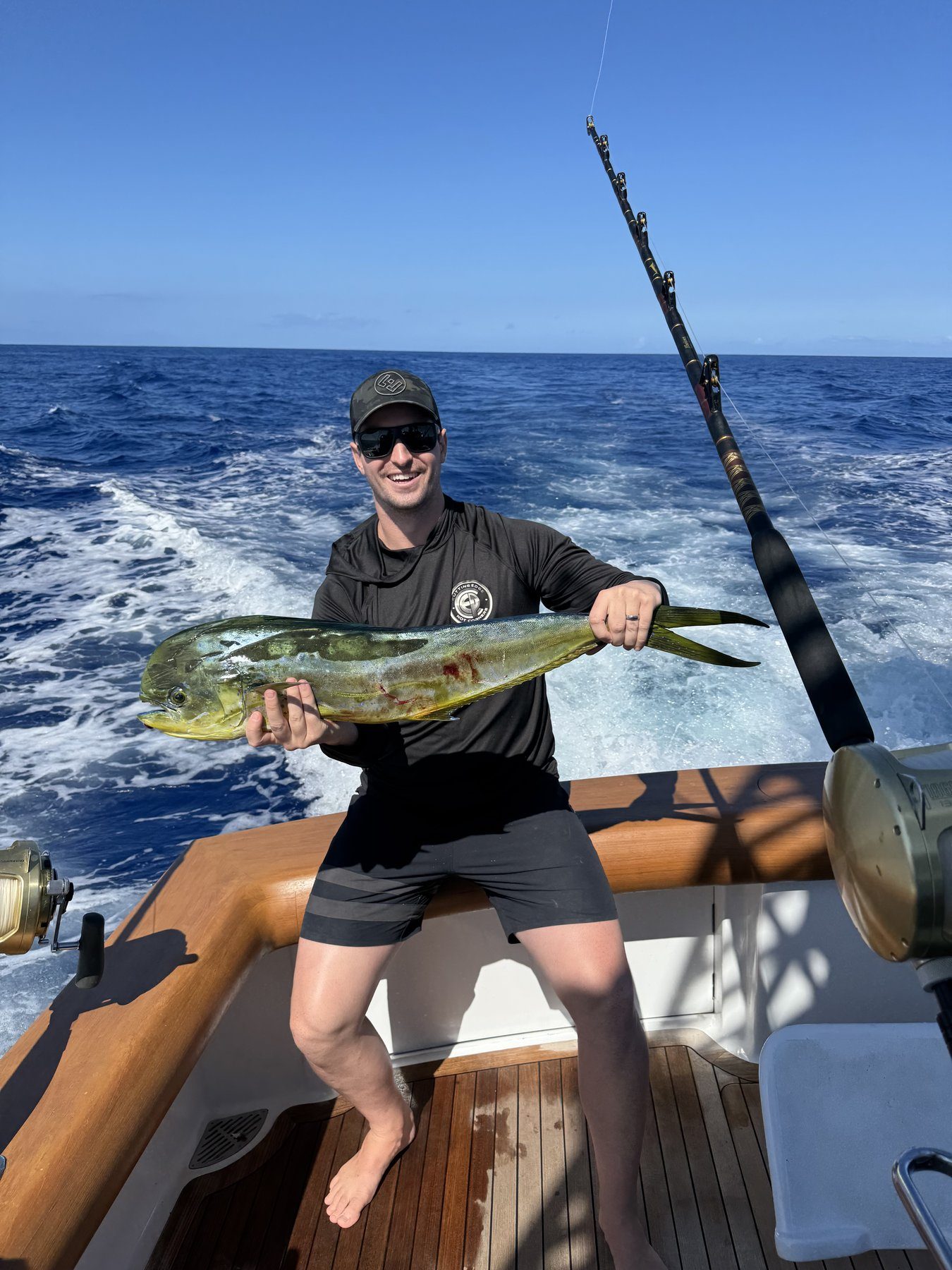
Mahi mahi are blue and gold and very pretty. They jump out of the water when hooked. Their bright colors fade quickly after they come on the boat. Most people say mahi is the best fish to eat.

Mahi are most common in the cooler months in Kona. They like to swim under floating wood and trash, and big birds (frigate birds) often fly above them. Watching the sky for birds is a good way to find mahi.

Best months: May–September · 25–60 lbs (the fastest fish here)

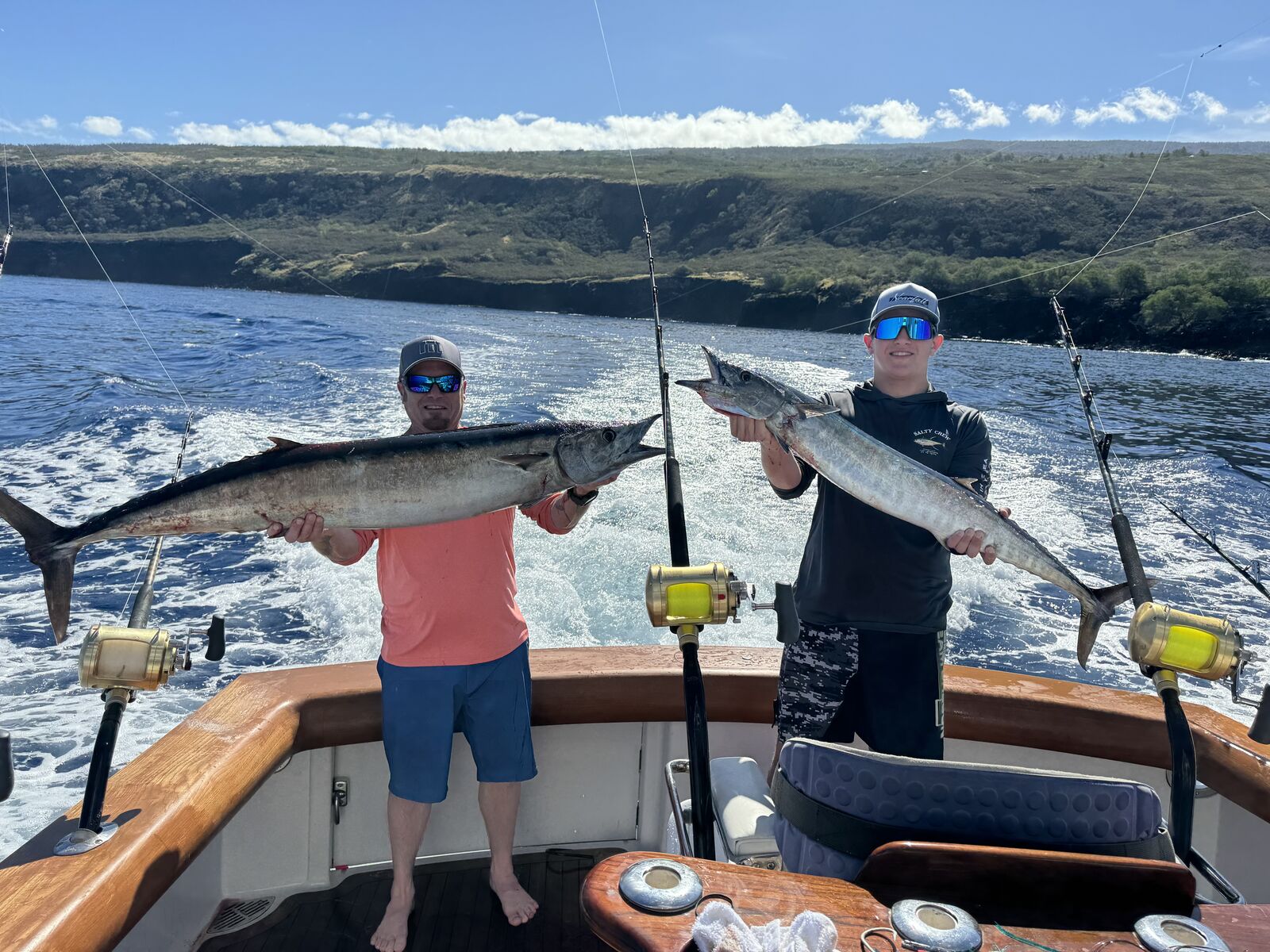
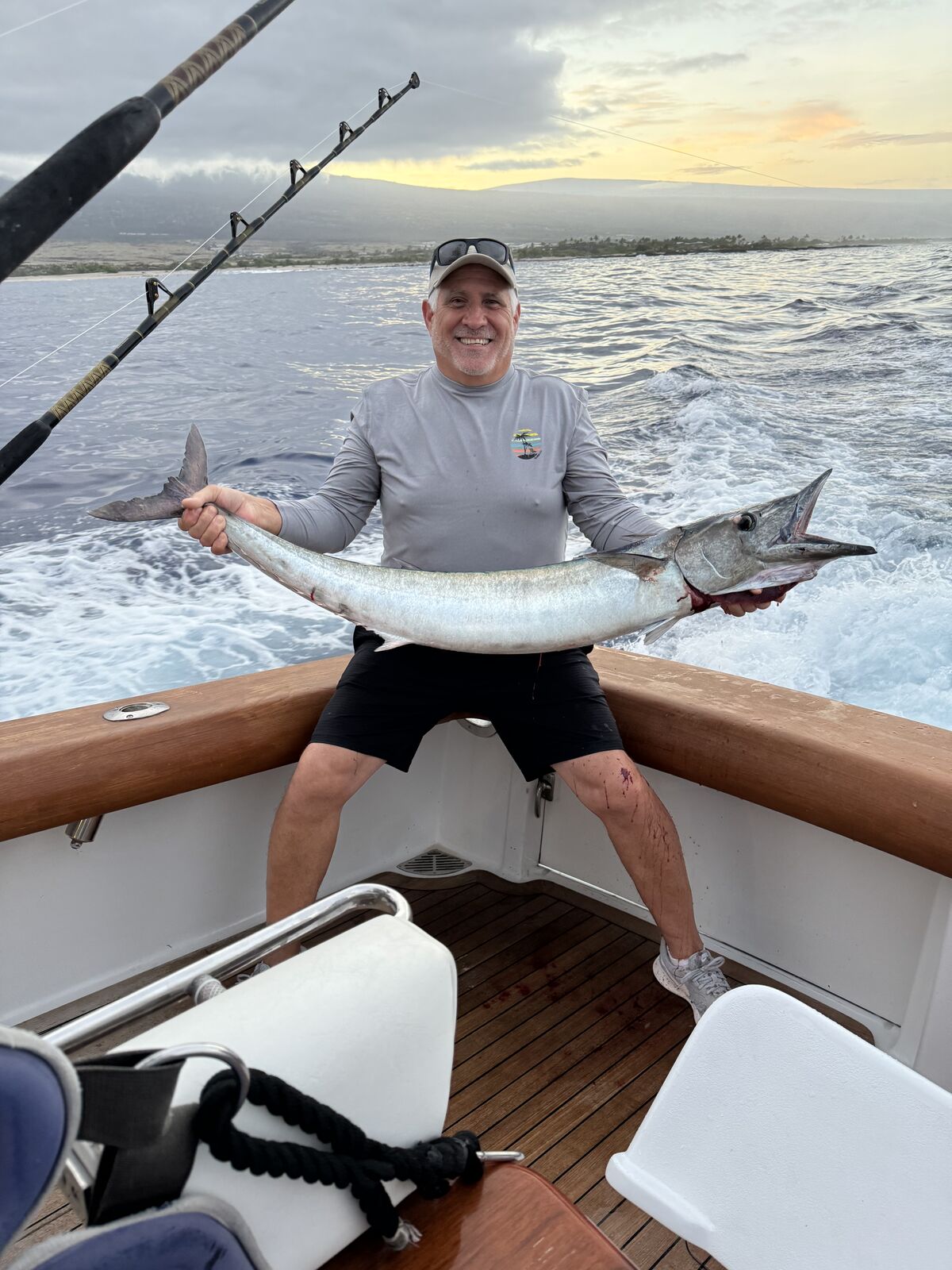
Ono are super fast. They hit fishing lures at over 45 miles per hour. They are long and skinny with sharp teeth, so anglers use wire fishing line so the ono can't bite through it.

Ono are easiest to catch around the full moon from May to September. Boats pull lures fast through the water to catch them.

Best months: January–March · 100–250 lbs (a winter fish)

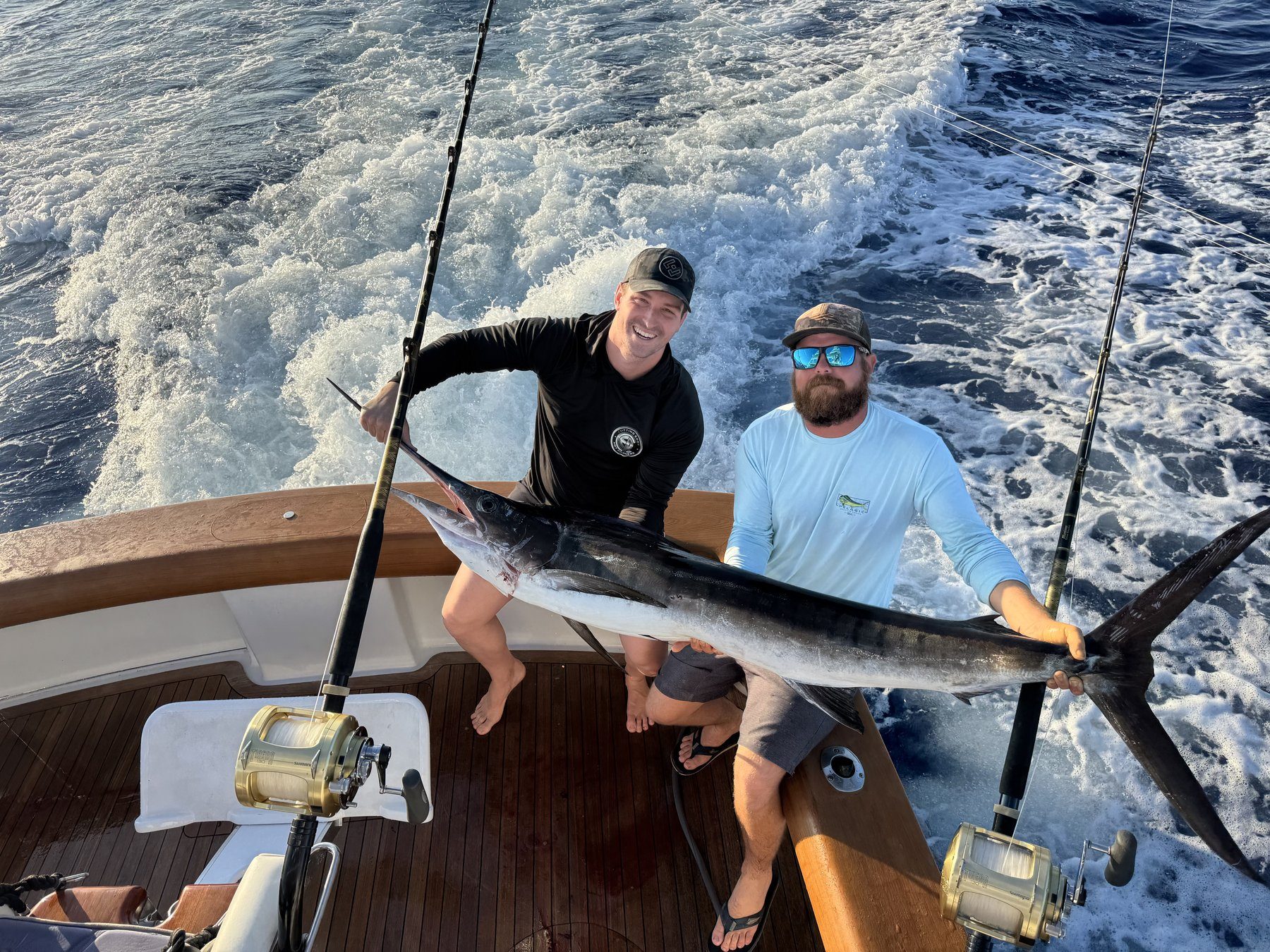
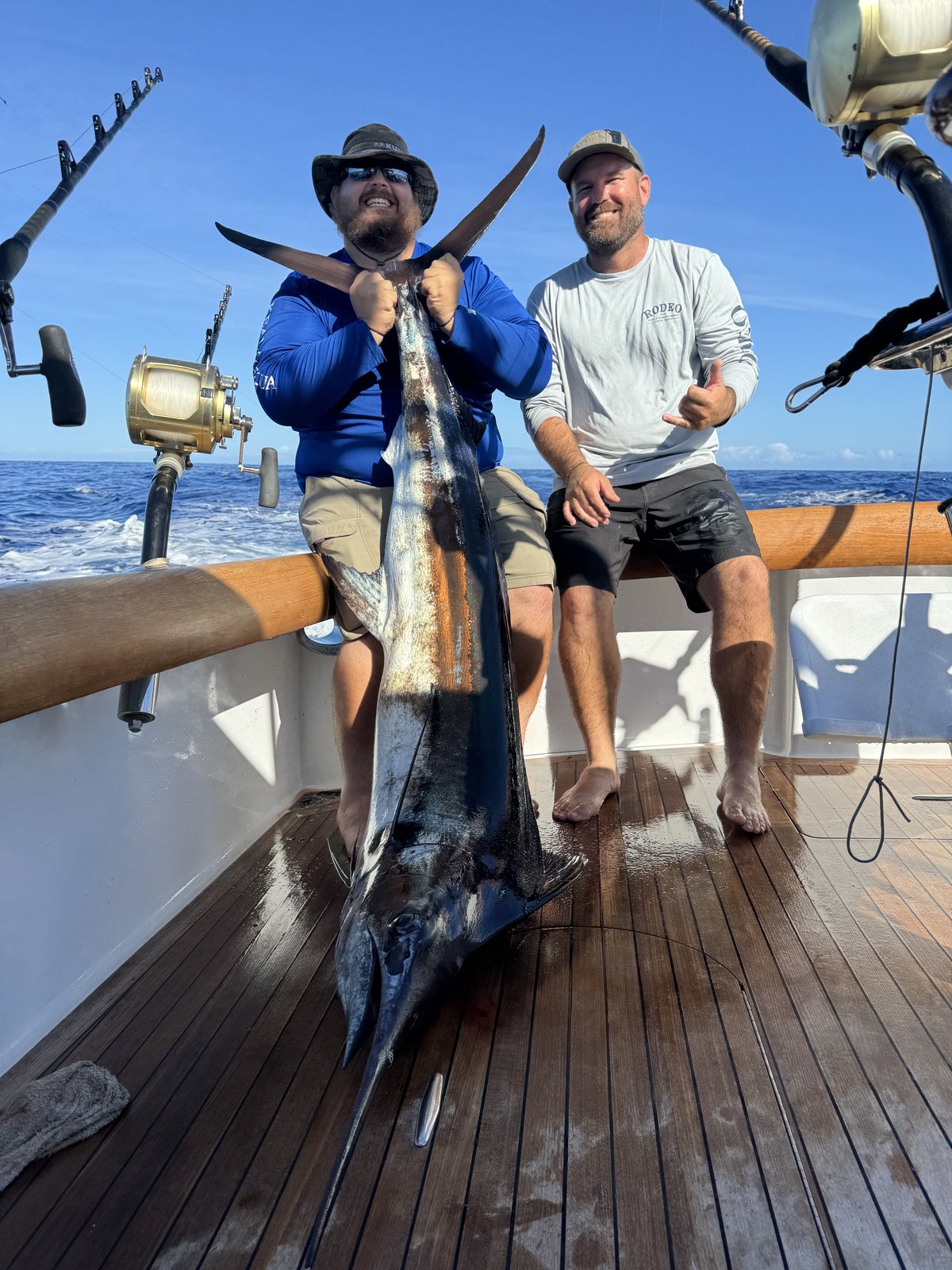
This is the winter marlin. It is smaller and faster than the blue marlin. It has bright blue stripes down its body that turn shiny when it gets excited. Striped marlin jump out of the water a lot — sometimes 10 or more times in one fight.

They are easiest to catch from January through March, when blue marlin are harder to find. They are caught the same way, with lures trolled behind the boat.

Best months: January–May · 20–60 lbs (small billfish)

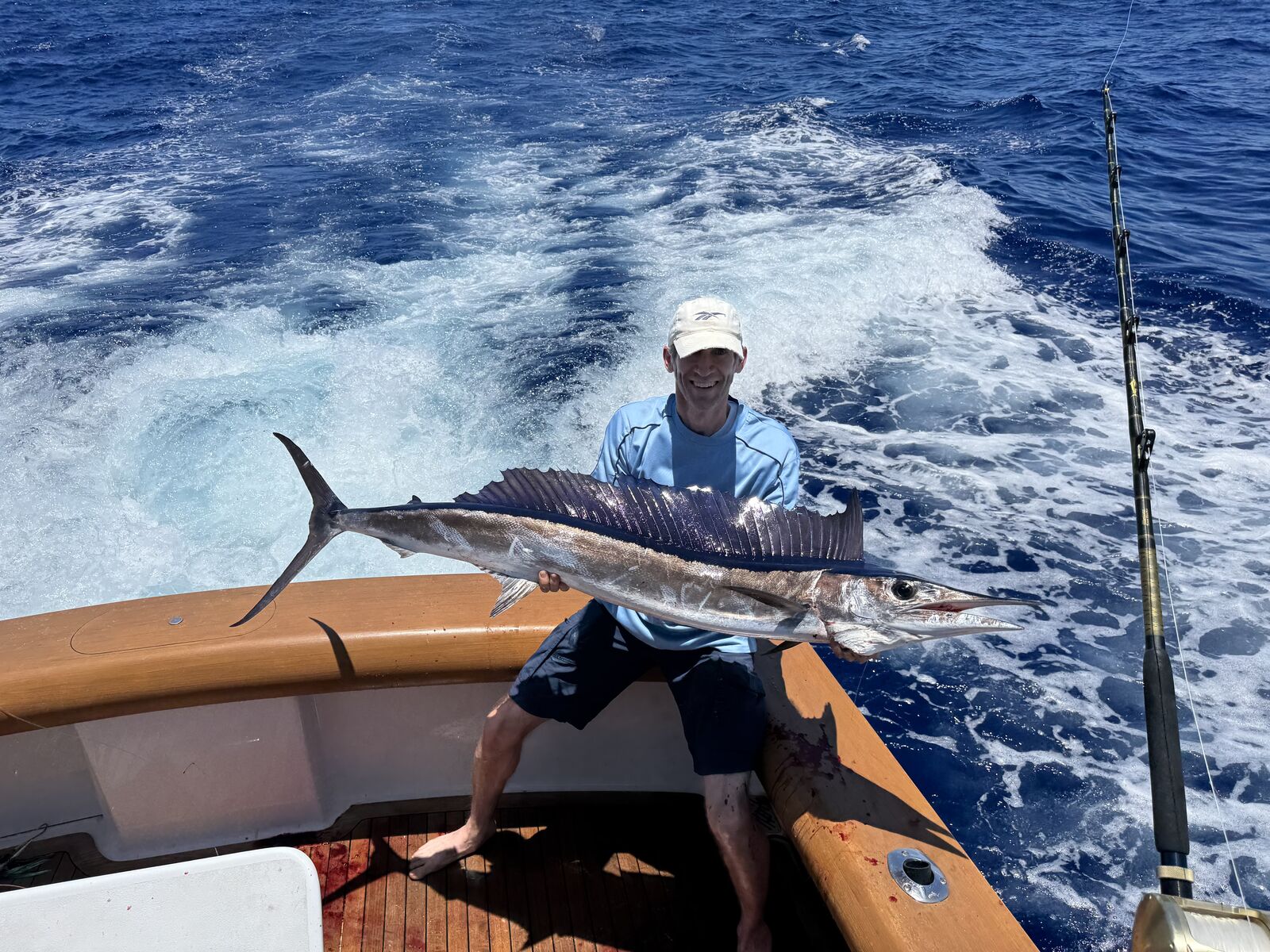
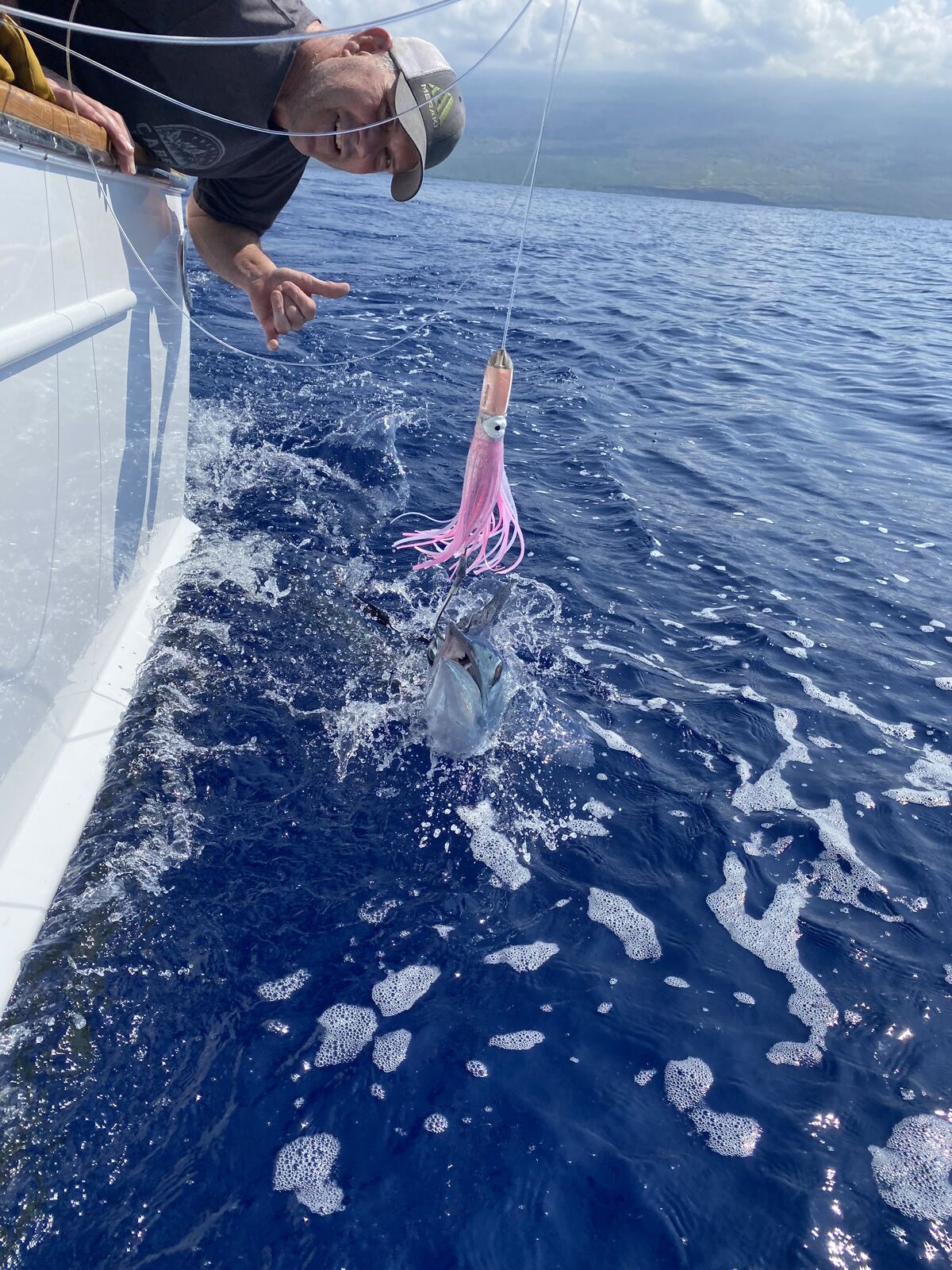
This is the smallest billfish you can catch in Kona, but it has a real bill like a marlin. It also has a big fin on its back like a sail. They show up in spring, from January through May, and they bite the same lures as blue marlin.

Spearfish are fun to catch on light fishing line. They jump and run fast. They are a great fish if you have never caught a billfish before.

Best months: October–February · 80–200 lbs (lives in very deep water)

Bigeye tuna have huge eyes. The big eyes help them see in deep dark water, where they spend most of their time. They look like yellowfin tuna but heavier. Many people say bigeye is the best tuna for sushi.

Bigeye come up to the surface during fall and winter in Kona. They swim near floating buoys far out in the ocean. When you hook one, it dives down deep instead of running on the surface like other tuna.

Best months: May–September · 5–25 lbs year-round (great live bait)

Aku swim in Kona all year long. They are what big marlin like to eat, so anglers often use a live aku as bait to catch giant marlin.

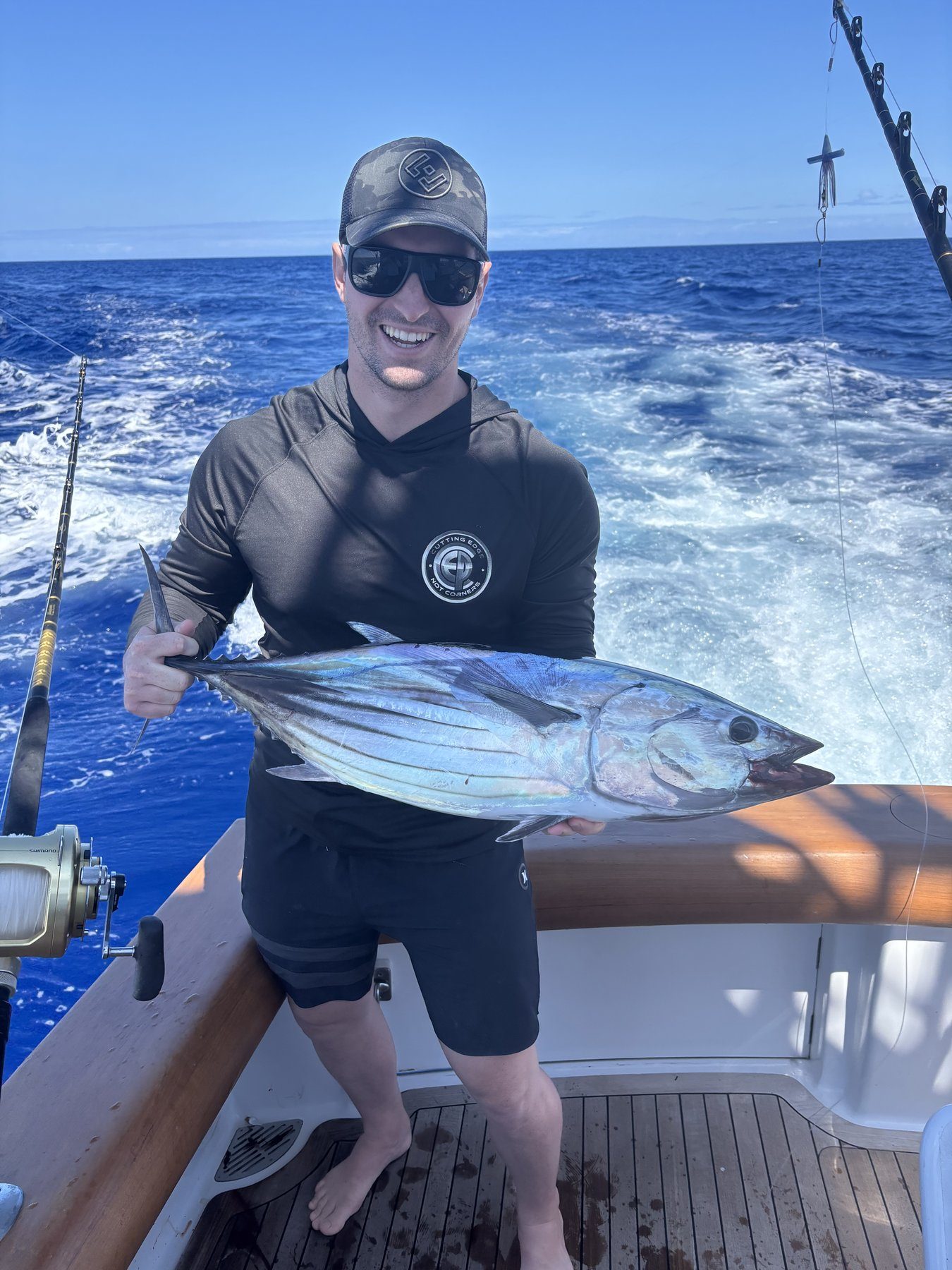
Aku are also fun to catch on light fishing line. They swim in big groups, so when you find them, you can catch a lot. Smoked aku is a popular Hawaiian food. If you have never been ocean fishing before, aku is a great first fish to catch.

Peak — on the chew Good — running Possible — quieter month

These are wild fish. The calendar shows what to expect, but the ocean decides what bites that day. Some days the fish bite a lot. Some days they don't. That's what makes fishing fun.

Off the Boat

Real fish caught in Kona.

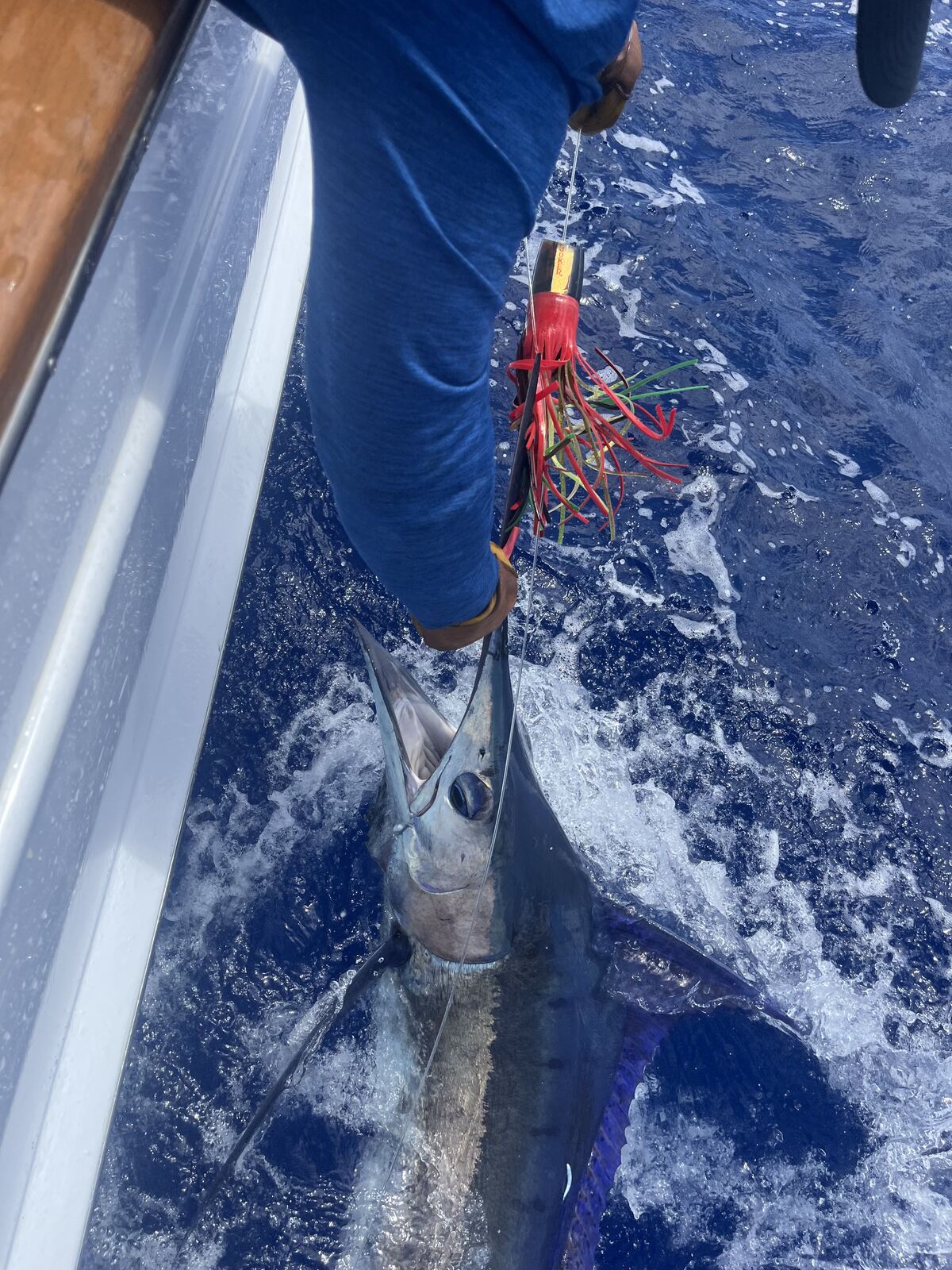
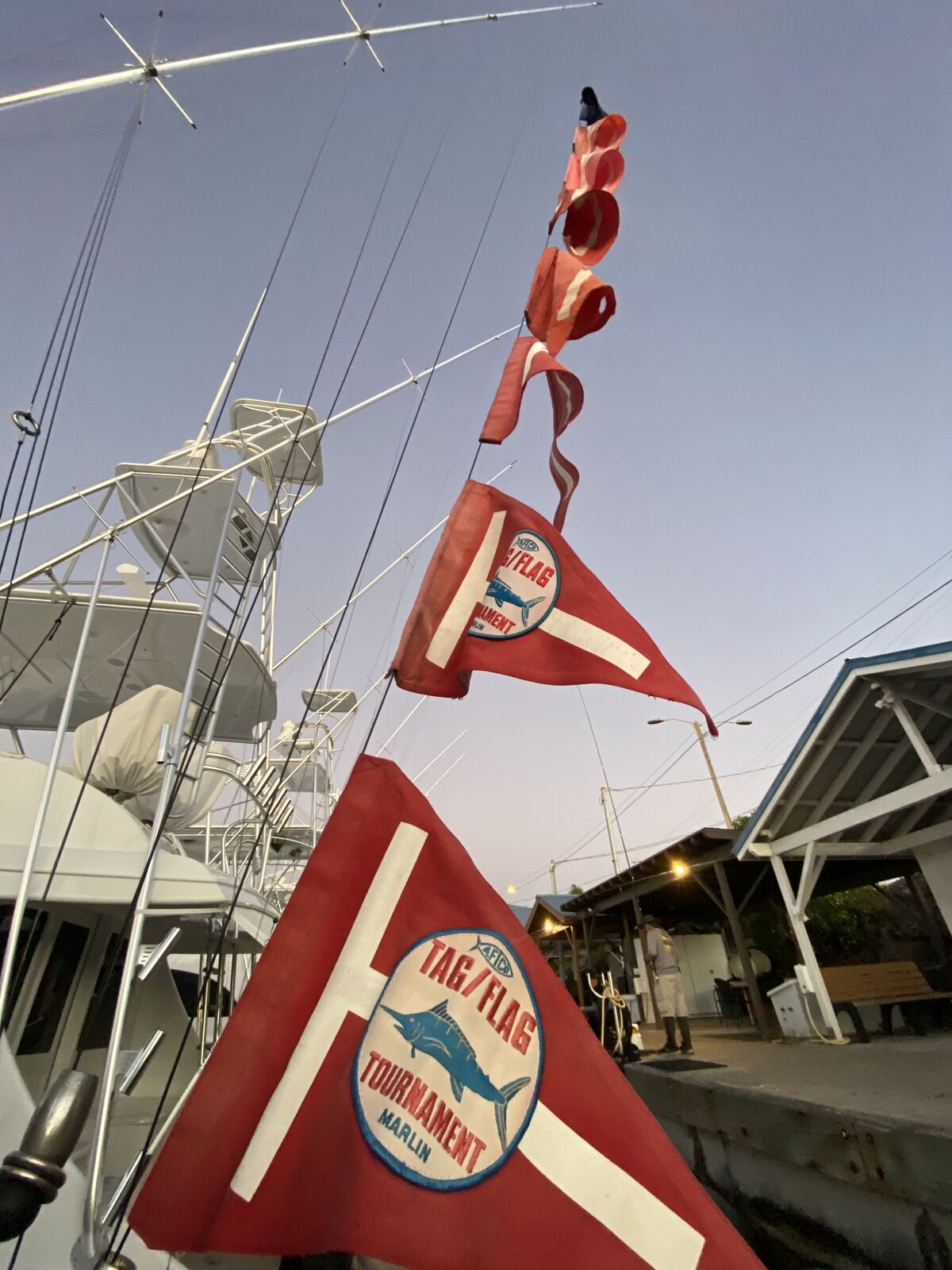
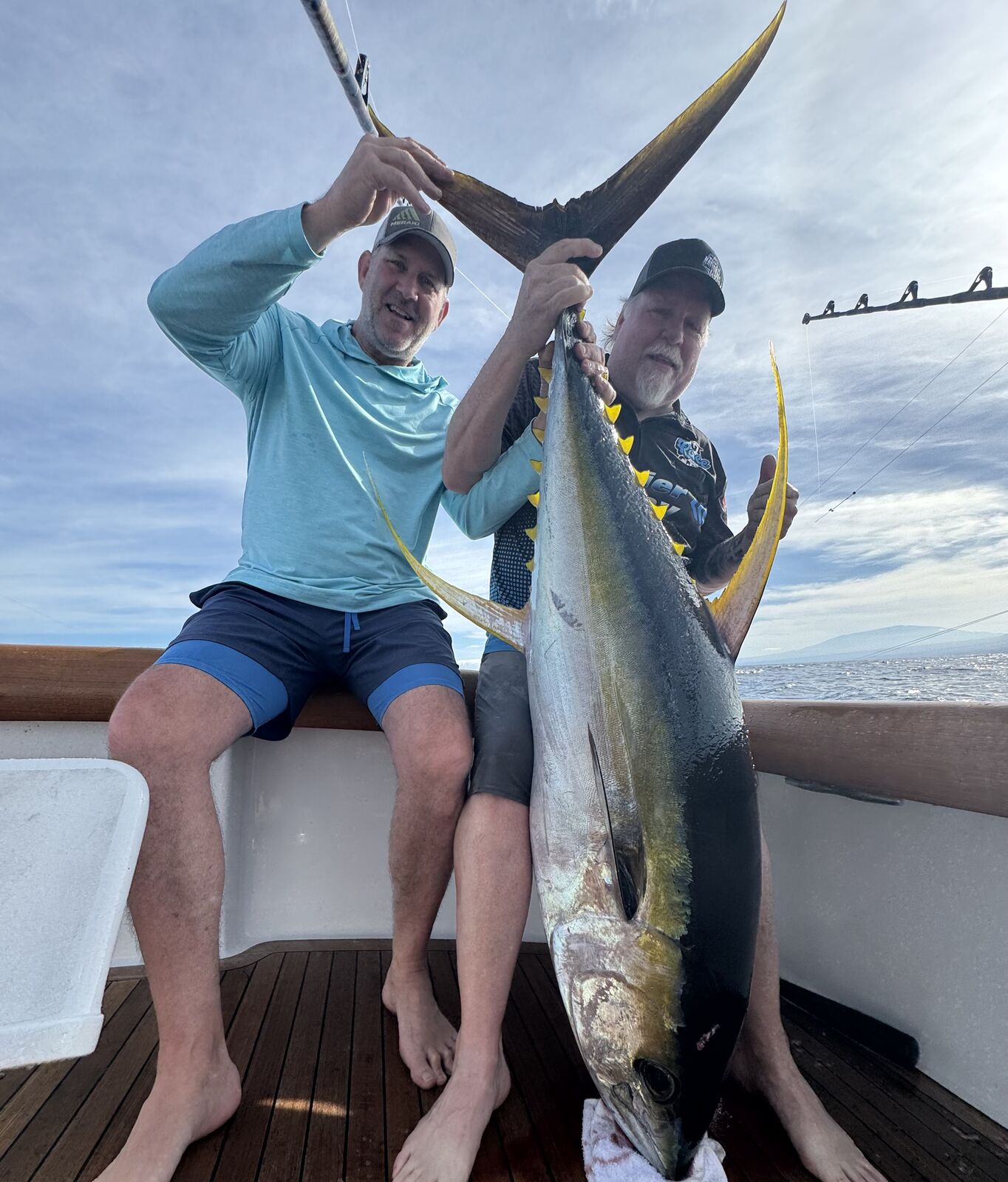
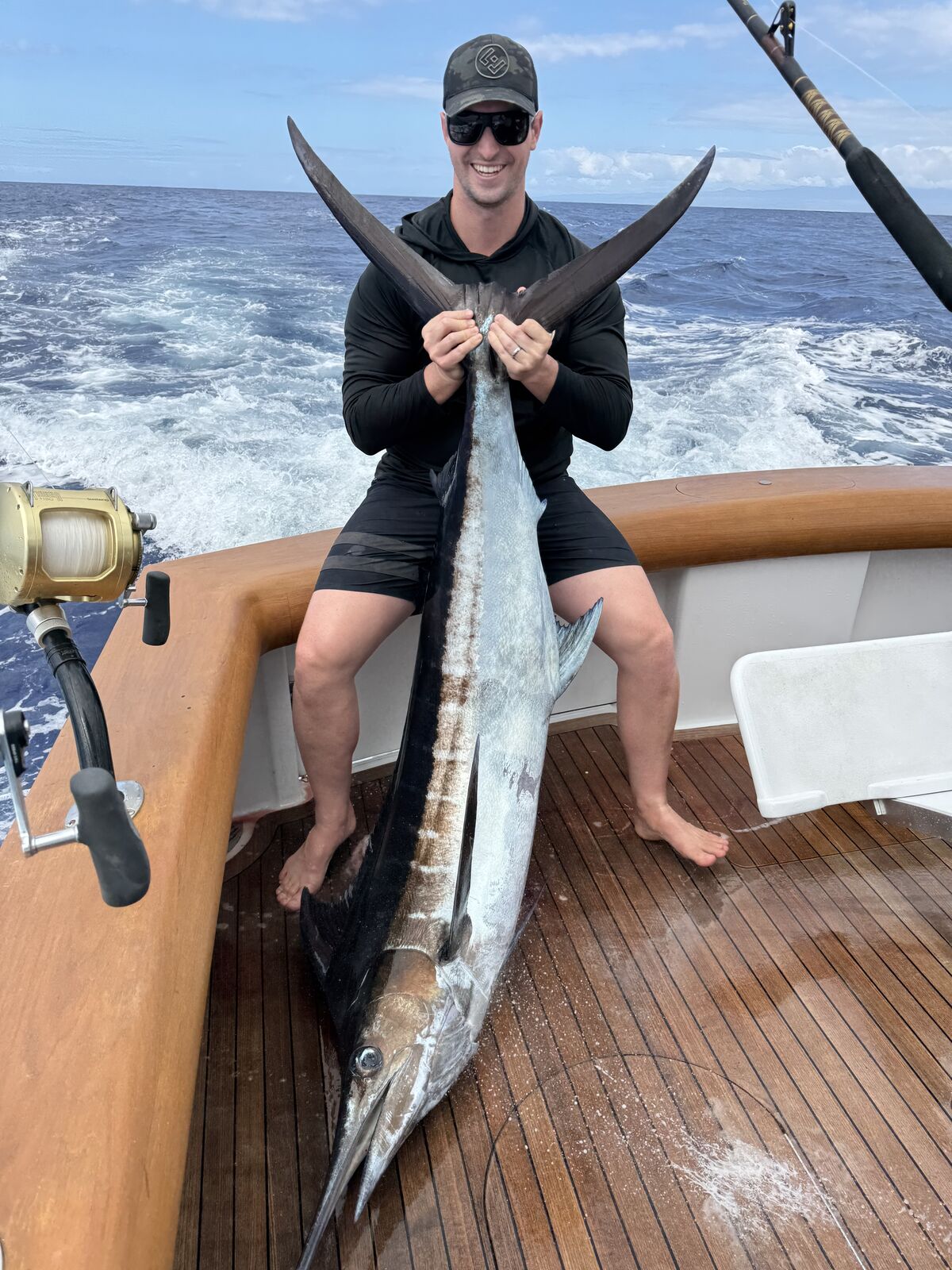
Here are some fish caught off Kona. Swipe or scroll to see more.

Catch aboard Ambush off Kailua-Kona
Aboard AmbushA day on the Kona coast.
Catch aboard Ambush off Kailua-Kona
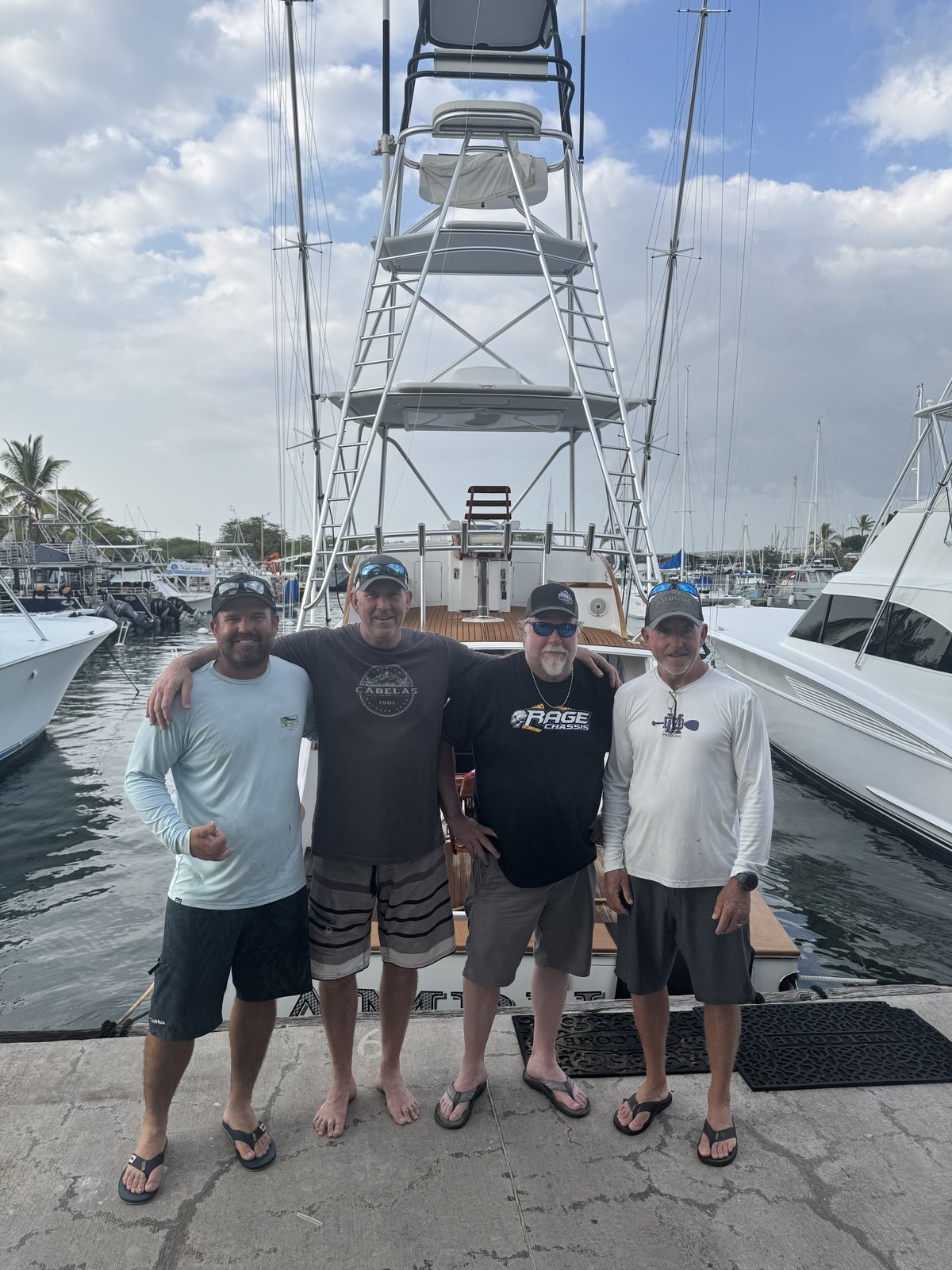
Honokōhau HarborThe end of a nine-hour day.
Catch aboard Ambush off Kailua-Kona
Aboard AmbushOut where the drop-off lives.
Catch aboard Ambush off Kailua-Kona
Aboard AmbushCaptain Mark on the wire.
Catch aboard Ambush off Kailua-Kona
Aboard AmbushA grin worth the early call.
Catch aboard Ambush off Kailua-Kona
Aboard AmbushHooked up and tight.
Catch aboard Ambush off Kailua-Kona
Aboard AmbushFrom the Kona drop-off.
Catch aboard Ambush off Kailua-Kona
Aboard AmbushYellowfin at the dock.
Catch aboard Ambush off Kailua-Kona
Aboard AmbushShortbill spearfish at the rail.
Catch aboard Ambush off Kailua-Kona
Aboard AmbushThe reason you came.
Catch aboard Ambush off Kailua-Kona
Aboard AmbushBringing one home.
Catch aboard Ambush off Kailua-Kona
Aboard AmbushYellowfin on the gaff.
Catch aboard Ambush off Kailua-Kona
Aboard AmbushWorking the long rigger.
Catch aboard Ambush off Kailua-Kona
Aboard AmbushHooked up early.
Catch aboard Ambush off Kailua-Kona
Aboard AmbushOne for the cooler.
Catch aboard Ambush off Kailua-Kona
Aboard AmbushThe reel's still screaming.
Catch aboard Ambush off Kailua-Kona
Aboard AmbushQuiet morning before the chew.
Catch aboard Ambush off Kailua-Kona
Aboard AmbushComing in heavy.
Catch aboard Ambush off Kailua-Kona
Aboard AmbushTagging up the bridge.
Catch aboard Ambush off Kailua-Kona
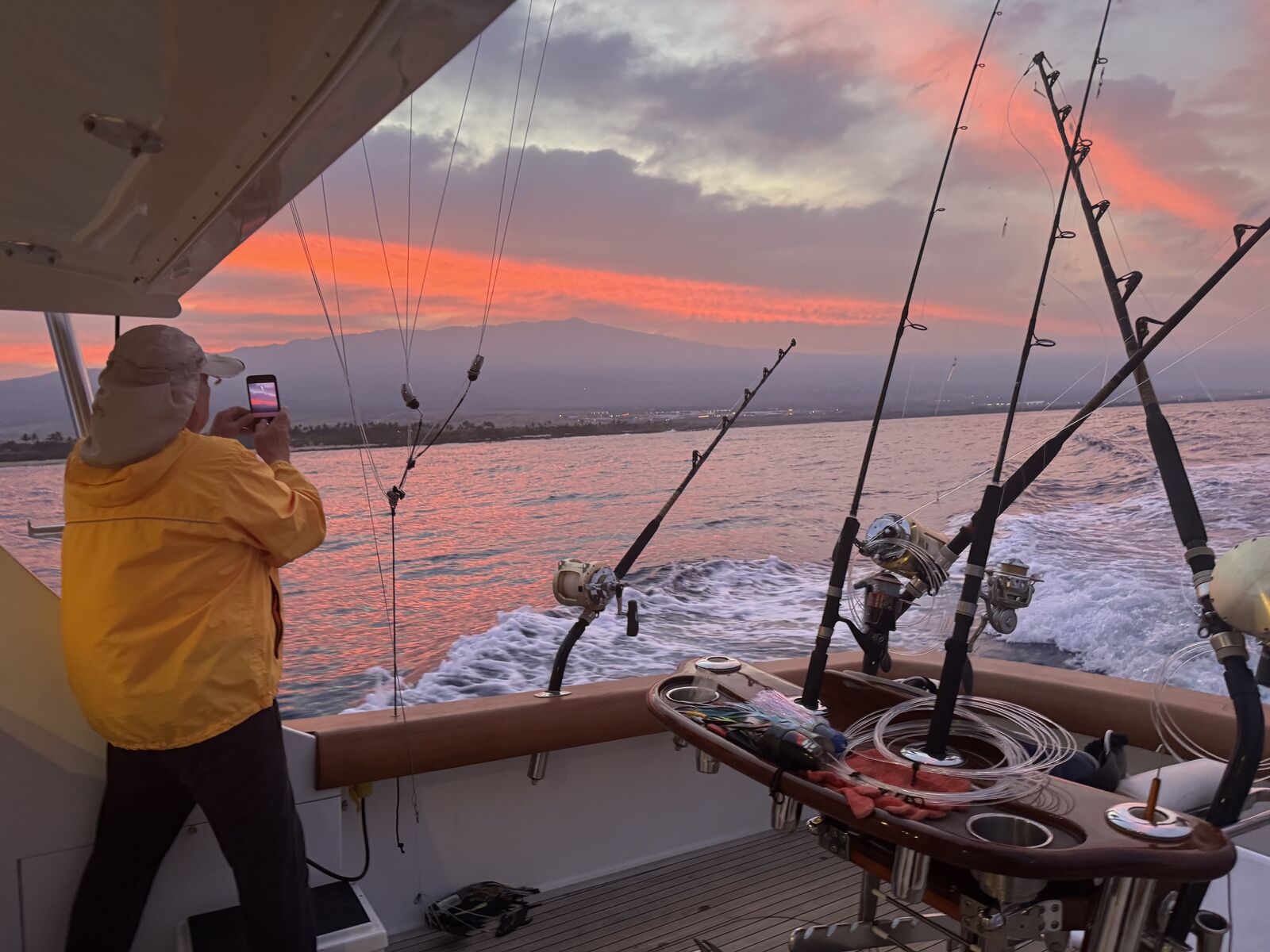
Aboard AmbushSunset on the water.
Captain Mark Bartell, Ambush Sportfishing

We run nine hours because that's how long it takes to fish Kona right — work the drop-off, find the porpoise pods, switch to live bait when the bite tells us to. The fish don't care about your watch. You just have to go fish.

Ready to fish?

Call Captain Mark for the bite report and to set up your day.

Call Captain Mark · (808) 366-4808
How We Fish

How we catch fish on Ambush.

There are three main ways we fish. Captain Mark picks the best one based on the weather, what other boats are catching, and what we see in the water that day.

The Spread

Pulling lures behind the boat

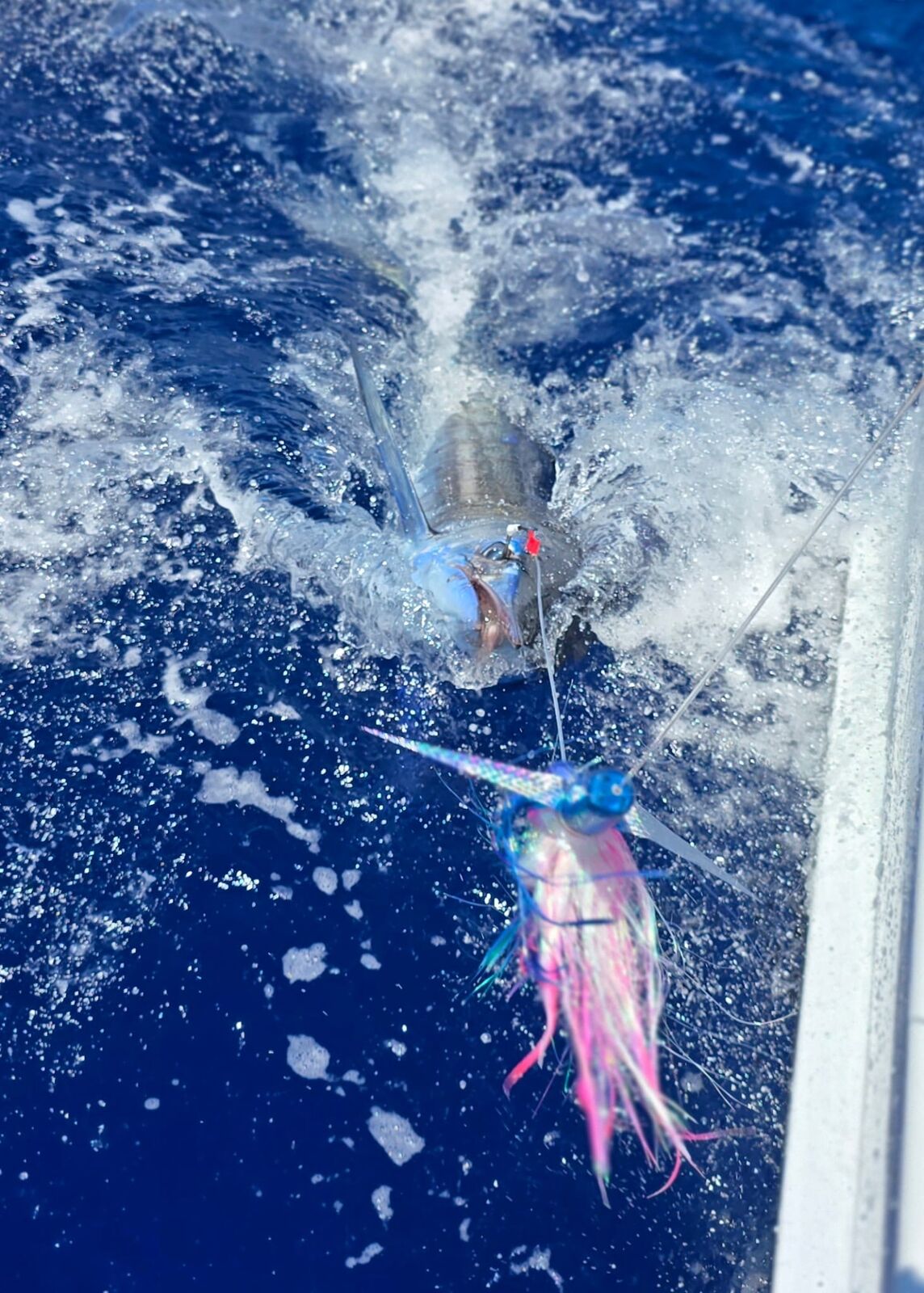
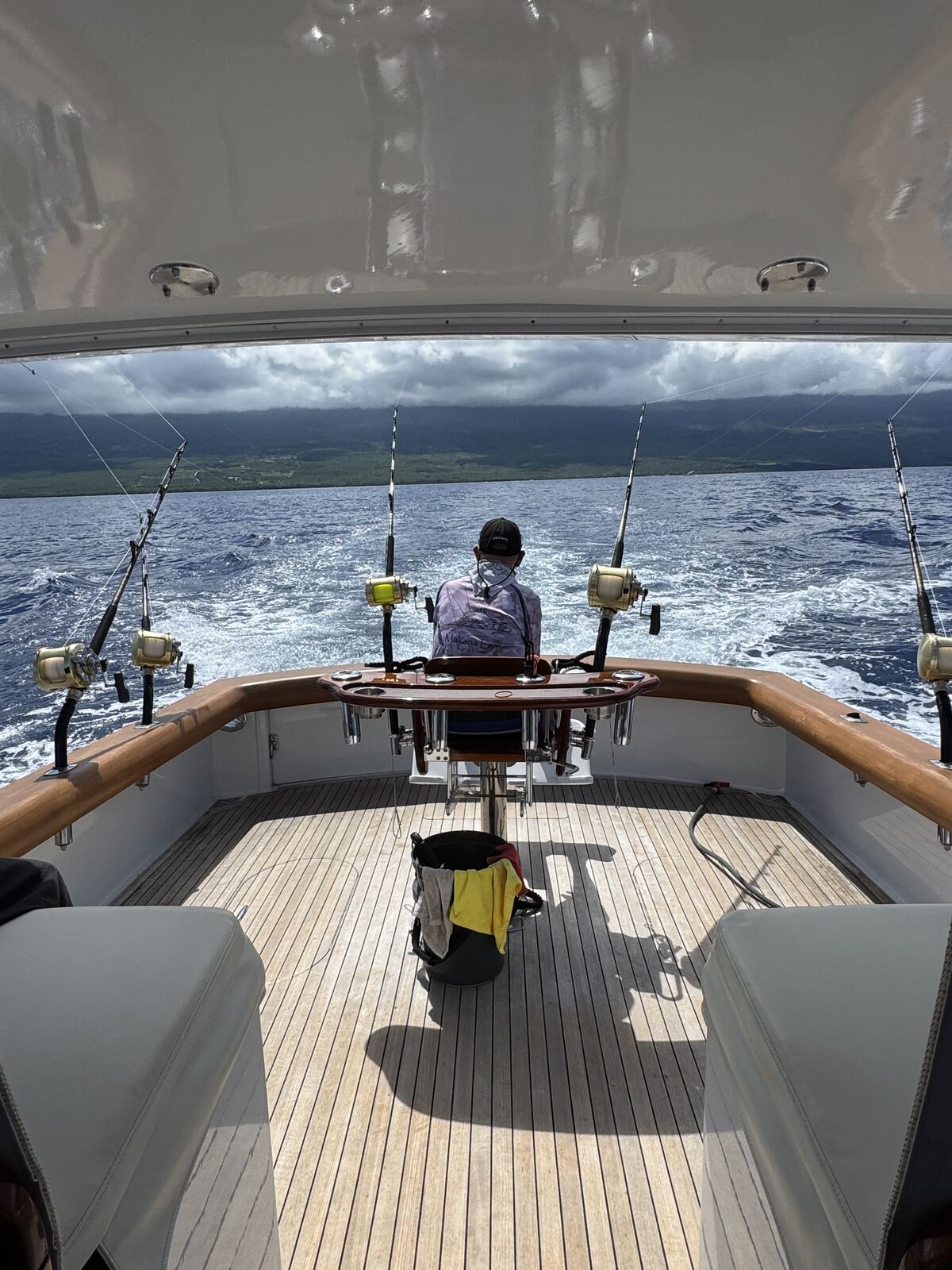
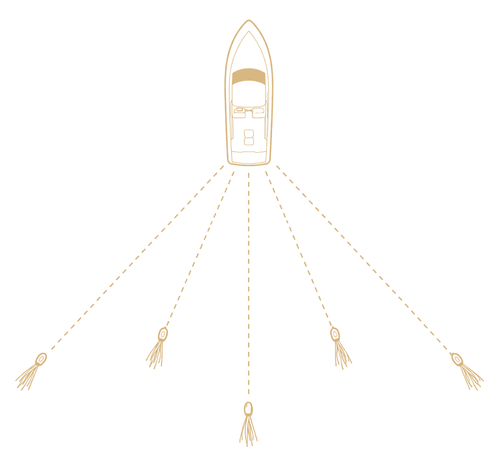
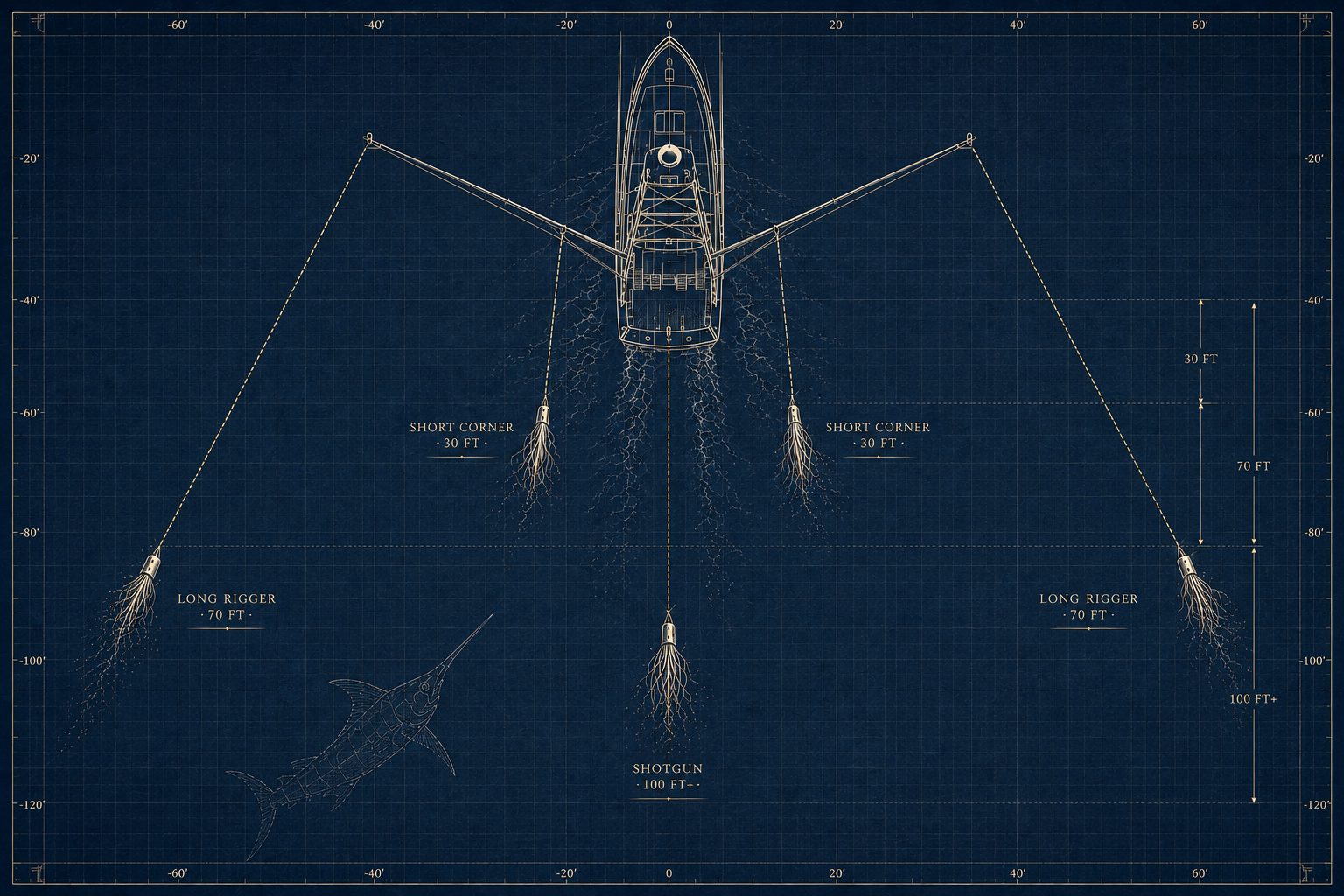
This is how most fish in Kona are caught. We pull 5 to 7 different lures behind the boat at the same time, each one at a different distance. When a marlin comes up to look at a lure, the captain watches what it does and decides how to make it bite.

Live Bait

Using a live fish as bait

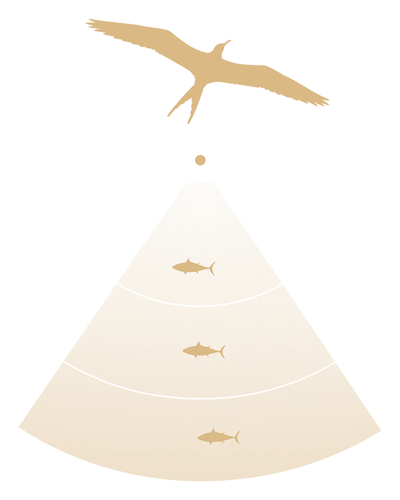
When we see dolphins and seabirds, big tuna and marlin are usually swimming below them. We catch a small live fish (aku) and put it on a hook. The live fish swims and splashes on top of the water. That splashing can bring a big marlin up to take a look — and when one bites, it is often the biggest fish of the day.

Reading the Water

Sonar and the sky

Ambush has special 360-degree sonar. It shows the captain where bait and big fish are swimming around the boat. We also watch the birds in the sky, floating logs and debris, and changes in water color. All of these clues help us find fish on slow days. Most of fishing is finding the fish, not fighting them.

The Spread, Up Close

Five lures, five jobs.

Each lure goes behind the boat at a different spot. They each have a different shape and sit at different distances from the boat. When a fish comes up to look, the captain decides which one to use to catch it.

Top-down blueprint diagram of Ambush's trolling spread — outriggers extended, five rods deployed, two short-corner lures at 30 ft, two long-rigger lures at 70 ft, and a shotgun at 100 ft
Short corner — the closest lure, in the bubbles right behind the boat where marlin like to bite. Long rigger — way out to the side, the lure that gets the most bites. Shotgun — far behind the boat in the middle. The last chance for fish to bite.
Book a Trip

Ready to set up your day on the water?

Call Captain Mark for the bite report, open dates, and what's included on a full-day charter.

Call to Book (808) 366-4808